
white paper

Traumatic Brain Injury Recovery with Photobiomodulation: Cellular Mechanisms, Clinical Evidence, and Future Potential

Abstract

Traumatic Brain Injury (TBI) remains a significant global health challenge, lacking effective pharmacological treatments. This shortcoming is attributed to TBI’s heterogeneous and complex pathophysiology, which includes axonal damage, mitochondrial dysfunction, oxidative stress, and persistent neuroinflammation. The objective of this study is to analyze transcranial photobiomodulation (PBM), which employs specific red to near-infrared light wavelengths to modulate brain functions, as a promising therapy to address TBI’s complex pathophysiology in a single intervention. This study reviews the feasibility of this therapy, firstly by synthesizing PBM’s cellular mechanisms with each identified TBI’s pathophysiological aspect. The outcomes in human clinical studies are then reviewed. The findings support PBM’s potential for treating TBI, notwithstanding variations in parameters such as wavelength, power density, dose, light source positioning, and pulse frequencies. Emerging data indicate that each of these parameters plays a role in the outcomes. Additionally, new research into PBM’s effects on the electrical properties and polymerization dynamics of neuronal microstructures, like microtubules and tubulins, provides insights for future parameter optimization. In summary, transcranial PBM represents a multifaceted therapeutic intervention for TBI with vast potential which may be fulfilled by optimizing the parameters. Future research should investigate optimizing these parameters, which is possible by incorporating artificial intelligence.
Read More» | Download PDF»


white paper

Photobiomodulation for Neurodegenerative Diseases

Abstract

Neurodegenerative diseases involve the progressive dysfunction and loss of neurons in the central nervous system and thus present a significant challenge due to the absence of effective therapies for halting or reversing their progression. Based on the characteristics of neurodegenerative diseases such as Alzheimer’s disease (AD) and Parkinson’s disease (PD), which have prolonged incubation periods and protracted courses, exploring non-invasive physical therapy methods is essential for alleviating such diseases and ensuring that patients have an improved quality of life. Photobiomodulation (PBM) uses red and infrared light for therapeutic benefits and functions by stimulating, healing, regenerating, and protecting organizations at risk of injury, degradation, or death. Over the last two decades, PBM has gained widespread recognition as a non-invasive physical therapy method, showing efficacy in pain relief, anti-inflammatory responses, and tissue regeneration. Its application has expanded into the fields of neurology and psychiatry, where extensive research has been conducted. This paper presents a review and evaluation of studies investigating PBM in neurodegenerative diseases, with a specific emphasis on recent applications in AD and PD treatment for both animal and human subjects. Molecular mechanisms related to neuron damage and cognitive impairment are scrutinized, offering valuable insights into PBM’s potential as a non-invasive therapeutic strategy.

Read more on pbmfoundation.org or download the PDF

white paper

Transcranial Photobiomodulation Treatment: Significant Improvements in Four Ex-Football Players with Possible Chronic Traumatic Encephalopathy

January 31, 2023

Abstract:
Chronic traumatic encephalopathy, diagnosed postmortem (hyperphosphorylated tau), is preceded by traumatic encephalopathy syndrome with worsening cognition and behavior/mood disturbances, over years. Transcranial photobiomod- ulation (tPBM) may promote improvements by increasing ATP in compromised/stressed cells and increasing local blood, lymphatic vessel vasodilation.

READ ONLINE»  |  DOWNLOAD PDF»

Transcranial Photobiomodulation Treatment Effects in Former Athletes with Repetitive Head Hits

Concussion (i.e., mild traumatic brain injury) and repetitive sub-concussive head hits are recognized by the sports medicine community and society at large as a major
public health concern. Psychiatric and neurocognitive functioning disruption and sleep disturbance are associated with these injuries. Transcranial photobiomodulation (tPBM) has been
proposed as a non-invasive treatment.

Download the PDF provided by the University of Utah »


Red/near-infrared irradiation therapy for treatment of central nervous system injuries and disorders

Irradiation in the red/near-infrared spectrum (R/NIR, 630–1000 nm) has been used to treat a wide range of clinical conditions, including disorders of the central nervous system (CNS), with several clinical trials currently underway for stroke and macular degeneration. However, R/NIR irradiation therapy (R/NIR-IT) has not been widely adopted in clinical practice for CNS injury or disease for a number of reasons, which include the following. The mechanism/s of action and implications of penetration have not been thoroughly addressed. The large range of treatment intensities, wavelengths and devices that have been assessed make comparisons difficult, and a consensus paradigm for treatment has not yet emerged. Furthermore, the lack of consistent positive outcomes in randomised controlled trials, perhaps due to sub-optimal treatment regimens, has contributed to scepticism. This review provides a balanced précis of outcomes described in the literature regarding treatment modalities and efficacy of R/NIR-IT for injury and disease in the CNS. We have addressed the important issues of specification of treatment parameters, penetration of R/NIR irradiation to CNS tissues and mechanism/s, and provided the necessary detail to demonstrate the potential of R/NIR-IT for the treatment of retinal degeneration, damage to white matter tracts of the CNS, stroke and Parkinson’s disease.


Read more on PubMed »

Tug McGraw Foundation-Supported Study Provides Hope for Improving Cognitive Function in Veterans

A recently published Tug McGraw Foundation-funded study found that the use of red and near-infrared light therapy improved cerebral blood flow and cognitive functions in veterans with chronic traumatic brain injury (TBI). The landmark study is among the first to demonstrate objective evidence for the reversal of regional cerebral blood flow (rCBF) deficits in chronic TBI patients. Independent researchers, in collaboration with brain imaging and analytics company CereScan® Corp., used quantitative functional brain imaging and neuropsychological assessments to analyze the therapy’s effectiveness.

Read more at tugmcgraw.org or download the PDF

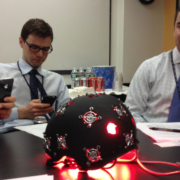
Photo courtesy of Massachusetts General Hospital

Let there be light – Study led by Mass. General suggests light therapy is safe and may help patients with moderate brain injury

Light therapy is safe and has measurable effects in the brain, according to a pioneering study by researchers from the Wellman Center for Photomedicine at Massachusetts General Hospital (MGH). Senior investigators Rajiv Gupta, director of the Ultra-High Resolution Volume CT Lab at MGH, and Benjamin Vakoc at the Wellman Center led the study, which was supported by a grant from the Department of Defense (DOD) and published in JAMA Network Open Sept. 14.

Read more on The Harvard Gazette or download the PDF»

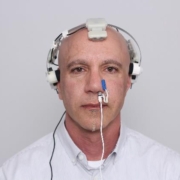
Photo courtesy of Massachusetts General Hospital

Effect of Transcranial Low-Level Light Therapy vs Sham Therapy Among Patients With Moderate Traumatic Brain Injury: A Randomized Clinical Trial

Abstract and Figures

Importance: Preclinical studies have shown that transcranial near-infrared low-level light therapy (LLLT) administered after traumatic brain injury (TBI) confers a neuroprotective response.

Objectives: To assess the feasibility and safety of LLLT administered acutely after a moderate TBI and the neuroreactivity to LLLT through quantitative magnetic resonance imaging metrics and neurocognitive assessment.

Read more on ResearchGate.net or download the PDF»

white paper

Resting-State Functional Connectivity: Signal Origins and Analytic Methods

Abstract

Resting state functional connectivity (RSFC) has been widely studied in functional magnetic resonance imaging (fMRI) and is observed by a significant temporal correlation of spontaneous low-frequency signal fluctuations (SLFs) both within and across hemispheres during rest. Different hypotheses of RSFC include the biophysical origin hypothesis and cognitive origin hypothesis, which show that the role of SLFs and RSFC is still not completely understood. Furthermore, RSFC and age studies have shown an “age-related compensation” phenomenon. RSFC data analysis methods include time domain analysis, seed-based correlation, regional homogeneity, and principal and independent component analyses. Despite advances in RSFC, the authors also discuss challenges and limitations, ranging from head motion to methodological limitations.

Read more on pubmed.ncbi.nlm.nih.gov or download the PDF

Light Therapy Saves Former BYU Linebacker From Suicide

For six weeks he reported to the V.A. alongside returning vets from Afghanistan and Iraq. The treatment was painless. In a process called photobiomodulation, each subject was hooked up to a machine that sent what is called “near infrared light” to various parts of the brain.“It’s groundbreaking, there’s no other word to describe it,” he says. “It just seems to reset the brain. The only side effect is I’m stronger and in better shape than I’ve ever been.”

Read more on Deseret News or download the PDF»